Solar panels can safely power the rebuilding of fire-affected communities, but only when designers and installers account for the striking geographic overlap between America’s best solar resources and its most wildfire-prone regions. New findings from the Department of Energy in 2026 confirm what many tribal communities in the Southwest and California have long observed: the same sun-drenched landscapes that promise energy independence also face heightened fire risk, creating a planning challenge that demands both technical precision and cultural wisdom.
The May 2026 Solar Risk Assessment from kWh Analytics makes clear that fire, alongside hail and equipment decisions, now ranks among the top threats to photovoltaic system performance nationwide. For tribal nations pursuing solar rebuilding after fire loss, this isn’t cause for retreat. It’s a call to lead with fire-resilient design from the first blueprint, integrating wildfire mitigation across the entire system lifecycle rather than treating it as an afterthought.
Communities rebuilding after disaster have an extraordinary opportunity to model what fire-safe solar looks like. Programs in regions from Los Angeles County to New Jersey are directing incentives toward solar generation, with New Jersey alone targeting 750 megawatts annually through 2026. Tribal solar initiatives, working in partnership with organizations like GRID Alternatives, can shape these rebuilding efforts to honor both safety and sovereignty, ensuring that the next generation of community-scale solar stands strong against the flames.
The path forward requires understanding three things: how fire and photovoltaic systems interact, which mitigation strategies work at each project stage, and where current funding programs intersect with tribal priorities. What emerges is a resilience framework built not on avoidance, but on informed, community-led action.
What Changed: 2026 Developments in Photovoltaic Fire Risk Management
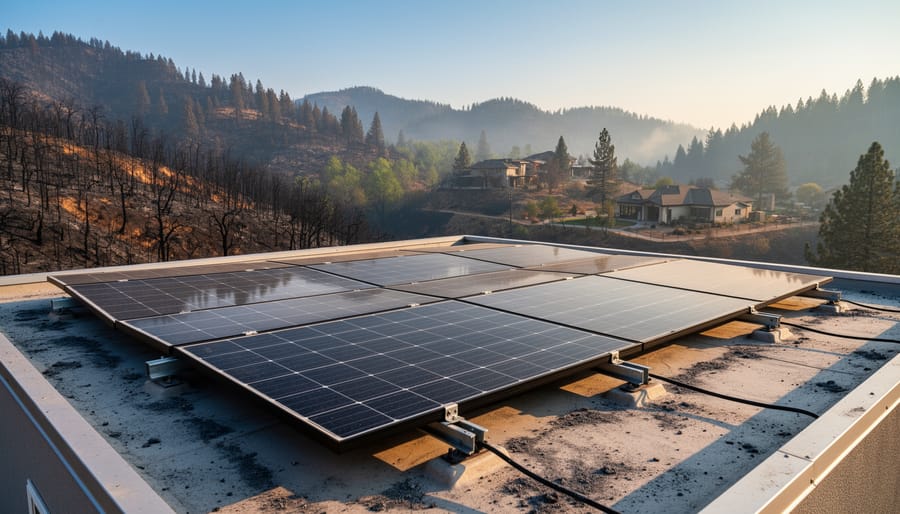
In 2026, the conversation around photovoltaic systems and fire risk shifted from theoretical concern to quantified reality. The May 2026 Solar Risk Assessment confirmed what many in wildfire-prone regions already suspected: fire now ranks among the top three factors that can significantly impact solar project performance across the United States, alongside hailstorms and equipment stowing methods.
The Department of Energy’s research brought precision to the challenge, showing that regions with the strongest solar potential are often the same areas facing the greatest wildfire threat. This isn’t just a technical problem to solve. It’s a reality that communities rebuilding after fire disasters must address head-on, particularly tribal lands across the Southwest and West where solar resources are exceptional but fire risk is persistent. The Department also established that effective wildfire mitigation must span the entire system lifecycle, from how projects are designed and installed to how they’re maintained and assessed after damage occurs.
Key Developments Shaping Solar Rebuilding Efforts
1. High Solar Resource Areas Match High Fire Risk Zones
The Department of Energy’s research reveals a challenging geographic reality: America’s sunniest regions, where solar panels generate the most electricity, are also the areas most vulnerable to wildfire. This overlap isn’t coincidental. The same climate patterns that create abundant sunshine, limited cloud cover, low humidity, and extended dry seasons, also create conditions where fires ignite and spread rapidly.
For tribal communities in the Southwest and West, this finding carries special weight. Many tribal lands sit squarely in this dual-zone territory, blessed with exceptional solar resources but also exposed to increasing wildfire activity. Communities already rebuilding after fire damage face a pointed question: how do we harness our solar advantage while accounting for the very risk we just survived?
The answer isn’t to abandon solar development. Rather, this overlap demands that rebuilding decisions incorporate fire resilience from the start. A tribal community in Arizona or New Mexico planning solar infrastructure can’t treat fire risk as an afterthought. The Department of Energy notes that photovoltaic systems in wildfire-prone areas face long-term survivability challenges and reduced power production, making upfront planning essential.
Organizations like Electron Freedom and GRID Alternatives work with tribal communities navigating exactly this balance. They understand that the highest solar potential shouldn’t be abandoned because of fire risk. Instead, these partnerships help communities design installations that account for local fire behavior, vegetation management, and emergency response capacity. The goal is solar infrastructure that survives the next fire season, not just the first year of operation.
This geographic reality transforms how tribal communities approach solar rebuilding. It makes fire-resistant design a prerequisite, not an option.
2. Lifecycle Mitigation Strategies Now Standard Practice
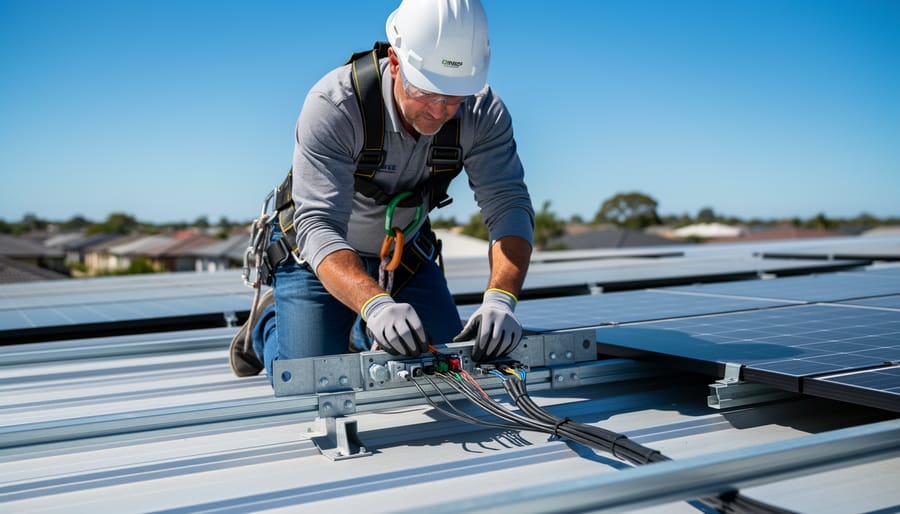
The Department of Energy’s comprehensive approach has transformed how communities plan solar installations in fire-prone regions. The DOE wildfire mitigation lifecycle framework now treats fire resilience as integral to every project phase, not an afterthought. This systematic methodology addresses vulnerabilities from conception through post-incident recovery, acknowledging that the highest solar resource areas in the United States are also among the most wildfire-prone regions.
For communities rebuilding after fire disasters, this lifecycle framework reshapes project planning from the ground up. Teams must now consider wildfire factors at each stage:
- Site assessment and design that evaluates fire exposure and evacuation routes
- Equipment selection prioritizing fire-resistant materials and rapid shutdown capabilities
- Installation practices that minimize ignition sources and maintain defensible space
- Ongoing maintenance protocols including vegetation management and inspection schedules
- Emergency response planning coordinated with local fire departments
- Post-damage evaluation procedures to assess system safety after wildfire exposure
This comprehensive approach creates significant opportunities for tribal workforce development. Installing fire-resilient systems requires expanded skills beyond standard solar installation, from understanding fire behavior patterns to implementing specialized mounting techniques. Organizations providing solar training can now incorporate these lifecycle strategies, preparing installers to serve their communities with systems designed for long-term survivability.
The shift means rebuilding communities aren’t choosing between solar adoption and fire safety. Instead, they’re building installations that integrate both from day one, creating resilient infrastructure that strengthens energy independence while addressing the realities of wildfire-prone landscapes.
3. State and Regional Incentive Programs Address Fire Recovery
Communities rebuilding after fire disasters now have access to incentive programs that can offset the cost of solar installations, though many are just beginning to address fire resilience explicitly. The New Jersey 3,750 MW solar target by the end of 2026, delivered through 750 MW annually, represents one of the nation’s most ambitious state-level solar commitments. While New Jersey faces different fire challenges than Western states, the program’s structure offers a model for consistent, predictable support that could be adapted to include fire-mitigation requirements.
Closer to the wildfire front lines, Los Angeles County rooftop PV rebates demonstrate how local governments can integrate solar recovery into broader rebuilding efforts. These programs acknowledge that families rebuilding homes face enormous financial pressure, and that solar installations, when done right, reduce long-term energy costs while supporting grid resilience. What’s missing from many current programs is explicit guidance on fire-resilient design choices or bonus incentives for systems that meet higher mitigation standards.
For tribal communities, partnerships with organizations like GRID Alternatives open doors to similar support. Many state and regional programs allow nonprofit partners to aggregate projects, access wholesale pricing, and provide workforce training, all while meeting the lifecycle mitigation standards now recommended by the Department of Energy. Tribal nations rebuilding after fire can advocate for dedicated funding streams that recognize their dual challenges: historical underinvestment in infrastructure and heightened exposure to climate-driven disasters. The opportunity exists to shape next-generation incentive programs that treat fire resilience not as an afterthought, but as a core design requirement alongside energy output and cost savings.
Why This Matters for Tribal Solar Initiatives
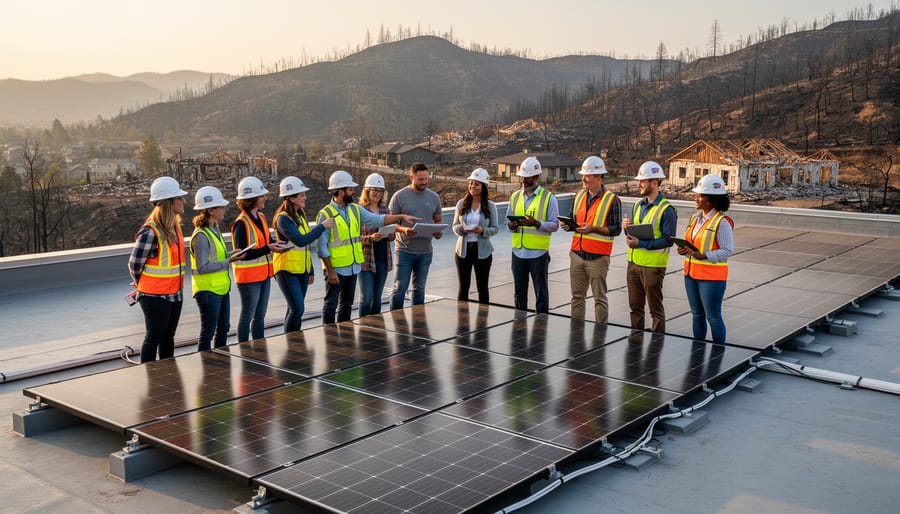
For tribal communities pursuing solar energy in fire-prone regions, these 2026 developments represent an opportunity rather than a barrier. The Department of Energy’s acknowledgment that the highest solar resource areas overlap with wildfire-prone zones validates what many tribal nations already know: their lands hold exceptional renewable energy potential precisely because of their geography and climate. Understanding photovoltaic fire risks doesn’t diminish this potential, it clarifies the path forward. Communities rebuilding after fire disasters now have access to lifecycle mitigation strategies that integrate fire resilience from initial design through long-term maintenance, turning what could be a vulnerability into a demonstration of sustainable planning.
The partnership between Electron Freedom and GRID Alternatives positions tribal communities to lead this integration. Training programs can now incorporate fire mitigation as a core component alongside technical installation skills and renewable certifications preparing tribal workforce members to design and maintain systems that account for wildfire risk from day one. This creates employment pathways that combine traditional knowledge of land management with cutting-edge solar technology and fire science. When tribal installers understand both the renewable energy systems and the specific fire behavior patterns of their regions, they bring unique expertise that strengthens every project.
Rebuilding contexts offer particularly powerful opportunities. Tribal communities working with partners to install solar infrastructure after fire damage can implement the full range of mitigation strategies the Department of Energy recommends, design considerations that reduce ignition risk, placement decisions that account for fire spread patterns, maintenance protocols that address vegetation management, and assessment frameworks for post-fire system evaluation. These aren’t theoretical approaches; they’re practical steps that tribal projects can demonstrate and document, creating case studies for other fire-prone regions. The work happening on tribal lands today will inform national standards and best practices tomorrow, positioning tribal nations as authorities in an area where renewable energy and climate resilience intersect.
What to Watch: Future Directions and Opportunities
Several promising directions point toward safer, smarter solar deployment in fire-prone regions, creating opportunities for communities to lead rather than follow. Building codes in high-risk states will likely incorporate specific PV fire resistance standards by 2027, giving tribal nations a chance to shape those requirements through early adoption and collaboration with code officials. Training curricula that combine solar installation skills with fire mitigation techniques open new career paths for tribal workforce development, positioning community members as experts in resilient energy infrastructure.
Funding is evolving to match the challenge. Federal agencies and foundations are beginning to prioritize grant applications that demonstrate fire resilience alongside renewable energy capacity, particularly for tribal projects that incorporate traditional land management knowledge with modern mitigation strategies. This shift rewards comprehensive planning rather than fastest deployment.
Communities rebuilding with fire-resilient solar in mind should monitor these emerging opportunities:
- Workforce training programs that certify installers in both solar technology and wildfire mitigation design
- Grant applications to federal and state agencies that emphasize dual benefits of renewable energy and community resilience
- Collaborative planning processes that bring together solar developers, fire districts, and tribal land managers
- Research partnership opportunities with Department of Energy labs studying PV performance in wildfire conditions
Early adopters implementing the lifecycle mitigation strategies documented in 2026 will generate valuable data and stories. Tribal nations that partner with organizations like GRID Alternatives to pilot fire-conscious solar designs can document what works, creating models that other communities adapt to their specific landscapes. These demonstration projects position indigenous communities as knowledge leaders, sharing expertise that protects both renewable energy investments and the land itself. The next two years will separate communities that react to fire risk from those that proactively integrate solar and fire management into unified resilience strategies.
Common Questions About Solar Safety in Fire-Prone Areas
Communities considering solar installations in wildfire-prone regions often share similar concerns about safety and resilience. These questions reflect genuine priorities for anyone rebuilding with renewable energy after fire disasters or planning new installations in high-risk areas.
Are solar panels themselves a fire hazard?
Solar panels are not inherently flammable and do not cause fires under normal operation, but they can be damaged by external fire exposure and remain electrically active even when disconnected from the grid. Proper system design with adequate spacing, fire-resistant materials, and accessible shutoff mechanisms significantly reduces any risk.
How do PV systems perform after wildfire exposure?
The Department of Energy notes that photovoltaic systems in wildfire-prone areas face long-term survivability challenges and reduced power production following fire events. Systems may experience damage to wiring, inverters, mounting hardware, and panel surfaces from heat, smoke, and airborne debris even if panels appear intact.
What design choices reduce fire risk?
The Department of Energy recommends wildfire mitigation strategies covering the entire system lifecycle, from initial design through post-damage assessments. Key choices include maintaining defensible space around ground-mounted arrays, using fire-rated roofing materials, installing rapid shutdown systems, and selecting components tested for high-temperature exposure.
Can existing installations be retrofitted for better fire resilience?
Yes, many existing systems can be upgraded with rapid shutdown devices, improved vegetation management around arrays, and enhanced monitoring equipment that detects smoke or temperature changes. A professional assessment can identify specific retrofit opportunities based on your system’s configuration and local fire risk.
How does this affect insurance and financing?
Some insurers now require fire mitigation plans for solar installations in high-risk zones, which can actually improve coverage terms when properly documented. Financing programs increasingly recognize fire-resilient design as a value factor, and rebuilding incentive programs in regions like Los Angeles County specifically include rooftop photovoltaic systems in their recovery support.
Understanding these practical considerations helps communities make informed decisions that balance renewable energy goals with fire safety. The 2026 Solar Risk Assessment highlights that solar project performance can be significantly impacted by fire, but this knowledge creates opportunities rather than barriers. When tribal communities work with experienced partners who understand both solar technology and local fire conditions, they can design systems that withstand environmental challenges while delivering long-term energy independence.
The highest solar resource areas in the United States overlap with the most wildfire-prone regions, which means many communities don’t face a choice between solar access and fire risk. Instead, the path forward involves building smarter from the start, integrating mitigation into every phase rather than treating it as an afterthought. Training programs that teach fire-resilient installation techniques create skilled local workforces who understand these dual priorities, turning potential obstacles into community assets.
Understanding photovoltaic fire risk doesn’t weaken the case for solar energy in fire-prone regions. It strengthens it. When tribal communities approach solar rebuilding with clear awareness of wildfire challenges and proven mitigation strategies, they create installations designed to last through the threats their landscapes face. This isn’t compromise. It’s leadership.
Through partnerships with Electron Freedom and GRID Alternatives, tribal nations are positioned to demonstrate how fire-resilient solar infrastructure works in practice. The communities rebuilding today with lifecycle mitigation built into every stage, from design through long-term maintenance, are writing the playbook for sustainable energy in wildfire country. They’re training the workforce that understands both solar technology and regional fire behavior. They’re proving that renewable energy and community safety advance together, not in opposition.
The path forward runs through preparation, not retreat. Tribal solar initiatives that integrate fire resilience from the start offer a model the entire country needs as climate patterns shift and wildfire exposure grows. This is the moment to build right, build strong, and build for generations.