
Solar battery maintenance protects your energy investment and ensures reliable power when you need it most. By using a battery maintainer (also called a trickle charger or float charger), you can prevent the slow capacity loss that occurs when solar batteries sit idle or during low-sunlight periods, particularly critical for off-grid systems that many tribal communities depend on for energy independence.
The practice is straightforward: a battery maintainer delivers a small, regulated charge that offsets natural self-discharge without overcharging. This simple tool can mean the difference between a battery system that performs reliably for years and one that fails prematurely, leaving communities without the clean energy they’ve worked to establish.
For tribal nations and remote communities building renewable energy infrastructure through partnerships like those with GRID Alternatives, battery maintenance isn’t just technical upkeep. It represents stewardship of resources that power essential services, support tribal resilience energy initiatives, and reduce dependence on costly fossil fuels. When batteries are properly maintained, solar systems deliver consistent power for health clinics, community centers, and homes even during extended cloudy periods or seasonal changes.
This guide walks you through the complete process: selecting the right maintainer for your battery type, connecting it safely, monitoring performance, and verifying that your system stays healthy. Whether you’re caring for a small home battery bank or managing a larger community energy storage system, these maintenance practices apply across all scales of solar infrastructure.
What You’ll Need to Maintain Your Solar Batteries
Proper battery maintenance doesn’t require an extensive toolkit, but having the right equipment makes the job safer and more effective. Most items you’ll need are readily available through hardware stores, solar equipment suppliers, or community tool-sharing programs that many tribal organizations have established.
Your essential equipment breaks down into a few key categories:
- Safety gear: Insulated gloves, safety glasses, and long sleeves to protect against acid and electrical contact
- Cleaning supplies: Baking soda, water, a stiff brush, and clean rags for terminal maintenance
- Basic hand tools: Adjustable wrench, screwdrivers, and wire brush for connection work
- Monitoring equipment: Digital multimeter for voltage checks and a hydrometer if you have flooded batteries
- Battery maintainer device: A quality trickle charger or smart maintainer matched to your battery type and voltage
- Documentation materials: Notebook or smartphone for recording readings and maintenance dates
The battery maintainer itself is your most important piece of equipment. These devices automatically regulate charging to prevent both overcharging and deep discharge, keeping your batteries in optimal condition during periods of low use or limited sunlight. Choose a maintainer that matches your system voltage, typically 12V, 24V, or 48V in most residential solar installations.
You don’t need expensive professional-grade equipment to maintain your system effectively. A reliable multimeter costs less than basic household tools, and many tribal communities have found success organizing equipment-sharing programs where members can access specialized tools like hydrometers when needed. GRID Alternatives training programs often help communities identify where to source affordable maintenance equipment and which brands hold up well in various climates and conditions common across tribal lands.
Safety First: What You Must Know Before You Begin
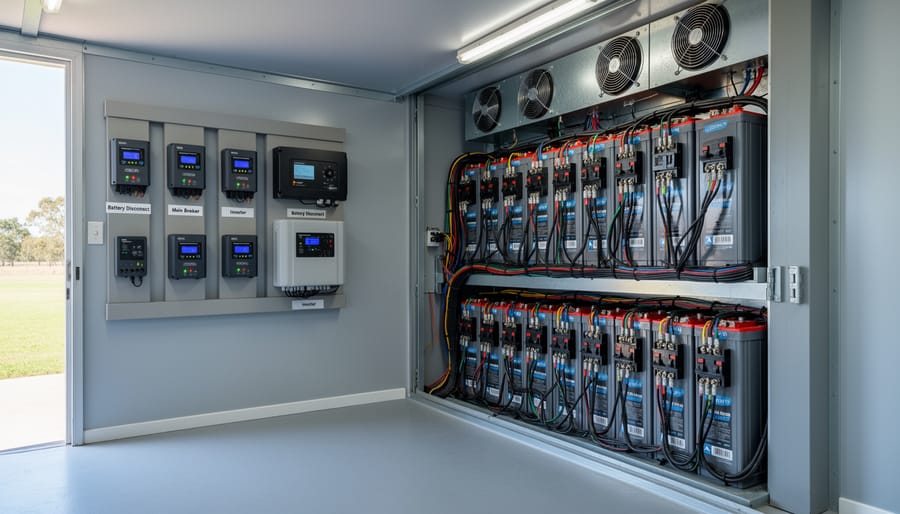
Working with solar batteries demands respect for the electrical and chemical hazards involved. Battery banks store significant energy and can deliver dangerous current levels even when the solar panels are disconnected from the system. Before you touch any battery terminal, ensure the system is properly isolated using the correct shutdown sequence, disconnect the charge controller from the batteries first, then disconnect any loads.
Wear safety glasses and rubber-insulated gloves rated for electrical work when handling batteries or maintainer connections. Lead-acid batteries, common in many tribal solar installations, produce hydrogen gas during charging, which is explosive in confined spaces. Ensure your battery enclosure has adequate ventilation, this matters whether your batteries are in a dedicated shed, a community building, or a shipping container adapted for energy storage. Work in a well-ventilated area and keep sparks, flames, and smoking materials away from the battery bank.
If you’re uncertain about your system’s configuration, notice any swelling or leaking batteries, smell sulfur or rotten eggs near the battery area, or see corrosion beyond normal surface buildup, stop and contact a trained technician. GRID Alternatives offers safety training as part of their tribal community solar programs, and these protocols are designed to protect both you and your energy investment. Stay current with PV fire risk updates to understand emerging safety considerations for solar energy systems.
Step-by-Step: How to Use Solar Battery Maintainers
Assess Your Battery System
Start by locating your battery bank, typically housed in a protected enclosure near your solar panels or inside a utility space. Look for a label or manufacturer plate that identifies the battery type. Most tribal solar installations use one of three technologies: flooded lead-acid batteries (which have removable caps and require regular water additions), sealed lead-acid batteries (also called AGM or gel batteries, with no serviceable parts), or newer lithium-ion systems (compact units with integrated electronics).
Check how many batteries you have and how they’re connected. Batteries wired in series (positive to negative) increase voltage, while parallel connections (positive to positive) increase capacity. Take a photo of your setup and note the arrangement, this helps you understand your system’s total voltage and capacity.
Identify what maintenance your specific batteries need. Flooded batteries require the most attention: checking water levels, cleaning terminals, and equalizing charges periodically. Sealed batteries need less frequent intervention but still benefit from terminal inspection and voltage monitoring. Lithium systems typically need minimal hands-on maintenance but may require firmware updates or monitoring through a display panel. If you’re uncertain about your battery type, contact the installer or look for documentation from your solar project partner, many GRID Alternatives installations include system diagrams and maintenance guides tailored to your specific equipment.
Connect and Configure Your Maintainer
Before you connect your maintainer, power down your solar system and give yourself plenty of workspace and light. Working methodically prevents mistakes that could damage your batteries or create safety hazards.
Start by identifying your battery terminals. The positive terminal is typically marked with a plus sign (+) and often has a red cover or cable. The negative terminal shows a minus sign (-) and usually connects to a black cable. Some batteries use wing nuts, while others have bolt-style terminals. Knowing what you’re working with helps you gather the right tools before you begin.
Follow this connection sequence carefully:
- Attach the maintainer’s positive cable (red) to the battery’s positive terminal first. Tighten the connection firmly so it won’t vibrate loose, but don’t overtighten to the point of cracking the terminal.
- Connect the maintainer’s negative cable (black) to the battery’s negative terminal. Again, make it snug without forcing it.
- Double-check both connections before proceeding. A loose connection creates resistance that generates heat and reduces charging effectiveness.
- If your maintainer has settings or modes, select the one that matches your battery type. Most devices label these clearly as flooded, AGM, or gel.
- Plug in or activate the maintainer according to the manufacturer’s instructions. Some units start automatically when connected, while others require you to press a button or switch.
Watch for an indicator light or display that confirms the maintainer is working. Most show a charging status that changes as the battery reaches full charge. If nothing lights up or the device shows an error, disconnect immediately and verify your connections match the maintainer’s diagram.
Your maintainer should now regulate voltage automatically, preventing both undercharging and overcharging. The device will adjust its output based on what your battery needs, keeping it in optimal condition without constant supervision.
Monitor Battery Health Regularly
Check your batteries at least monthly during normal operation, and weekly during extreme weather when your system works hardest. Regular inspection catches small issues before they become expensive problems that could leave your community without power.
During each check, look at the battery case for swelling, cracks, or leaking. These physical signs mean immediate action is needed. Feel around the batteries, they should be cool or slightly warm to the touch. Hot batteries signal a charging problem that needs attention.
Test the voltage when possible. A healthy charged battery shows readings in the normal range for its type, while consistent low readings suggest capacity loss or charging issues. If you notice the voltage dropping faster than usual between charges, your batteries may need professional evaluation.
Watch how long your batteries hold their charge during typical use. If you’re running out of power sooner than you used to with the same energy habits, your batteries are telling you something. Trust that pattern, it’s often the earliest warning sign.
Keep notes in a simple log. Write down the date, what you checked, and anything unusual you noticed. This record helps you spot trends and gives valuable information to technicians if you need support from GRID Alternatives or other professionals.
Perform Routine Cleaning and Inspection
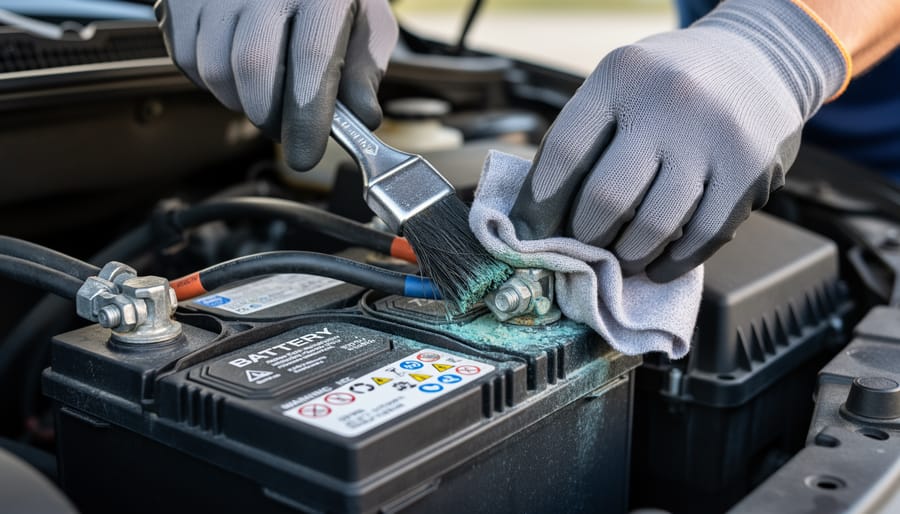
Before cleaning, power off any equipment drawing from the battery bank and disconnect the maintainer if it’s actively charging. This simple step prevents sparks and protects both you and your system.
Use a wire brush or battery terminal cleaner to gently remove white, crusty buildup, corrosion that naturally forms over time. For stubborn residue, a paste of baking soda and water works well, but wipe everything clean with a damp cloth afterward and let it dry completely before reconnecting. In dusty or high-wind areas common to tribal lands, you might find sand or debris in terminal connections; brush these clean to maintain solid electrical contact.
While cleaning, inspect each terminal for tightness. A loose connection can cause voltage drops and reduce battery life. Check cables for fraying, cracks in insulation, or rodent damage, issues that arise in remote installations.
Look over the battery cases for bulging, leaking, or cracks. These physical signs often appear before electrical problems become obvious. If you spot damage, document it with photos and contact a trained technician rather than continuing to use a compromised battery.
This hands-on inspection every few months keeps small issues from becoming system failures. Your notes on what you find create a maintenance history that helps spot patterns and plan replacements before emergencies arise.
Document Your Maintenance
Keep a simple maintenance log in a notebook or phone app. Record the date, what you checked, and what you found each time you inspect your batteries. Note any voltage readings, temperature observations, and cleaning you performed.
This record becomes valuable when you need to claim warranty coverage or when planning system upgrades. A clear maintenance history shows you’ve cared for your equipment properly and helps technicians diagnose issues faster if problems arise. Your documentation also helps other community members learn what normal looks like for your specific system.
How to Verify Your Batteries Are Properly Maintained
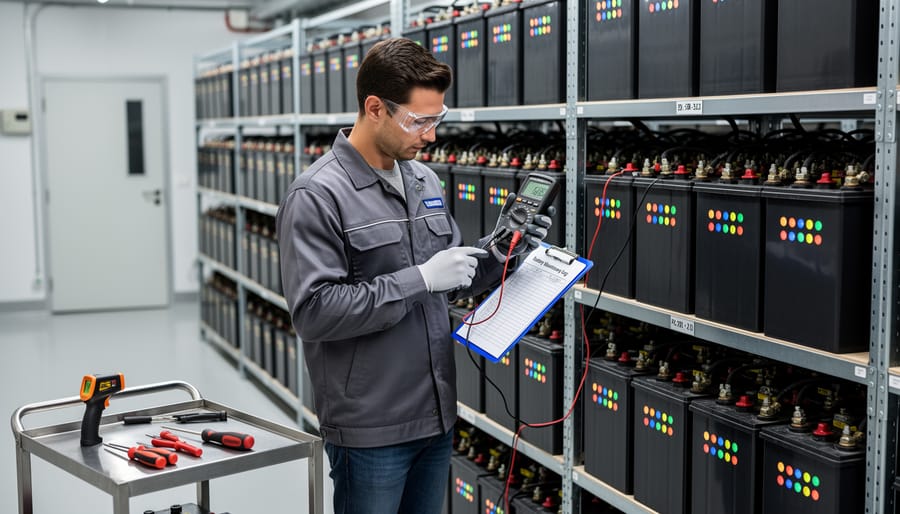
Your batteries tell you when maintenance is working. A well-maintained system delivers consistent power day after day, charges fully when sunlight returns, and holds that charge overnight without dramatic drops. You’ll notice your inverter readings stay stable, your lights don’t dim unexpectedly, and backup power lasts as long as it did when the system was new.
Healthy batteries show clear signs:
- Voltage readings remain consistent during charging and discharging cycles
- Battery terminals stay clean without corrosion buildup
- Temperature feels normal to the touch, not excessively warm
- Charge retention matches expected performance for your battery type
- Physical inspection reveals no swelling, leaking, or damage
Compare your current performance against the baseline you established when documenting maintenance. If your system powered essential loads for six hours initially, it should still deliver similar runtime. When performance slips noticeably, charge drops faster than normal, or capacity seems reduced, your maintenance records help identify when the change began.
Problems beyond routine maintenance require professional attention. Contact GRID Alternatives or a trained technician when you observe persistent capacity loss, unusual battery temperature, visible damage, or voltage readings that fluctuate wildly. Many tribal communities now have members who’ve completed renewable certification programs and can provide local expertise. These workforce development opportunities ensure communities can maintain their own solar infrastructure while creating sustainable careers.
Regular verification confirms your maintenance practices protect your energy investment and keep your system reliable for years ahead.
Common Questions About Solar Battery Maintenance
How often should I check my solar batteries?
For most systems, inspect batteries monthly to catch issues early and adjust your maintainer as needed. In extreme weather or if you rely heavily on stored power, check every two weeks to ensure everything’s working properly.
Can I use the same maintainer for different battery types?
Many modern maintainers work with multiple battery chemistries, but always verify compatibility before connecting. Check your maintainer’s specifications against your battery type to avoid damage from incorrect charging profiles.
What should I do if I’m too far from help when problems appear?
Document what you’re seeing with photos and notes, then reach out to your system installer or GRID Alternatives for remote troubleshooting. Many issues can be diagnosed and guided through by phone, and knowing when to disconnect safely prevents bigger problems.
Do maintainers work during winter when sunlight is limited?
Yes, though they may take longer to bring batteries to full charge during shorter days. Your batteries actually benefit more from maintainers in cold weather, when discharge rates increase and keeping them charged protects against freezing damage.
These questions come up regularly in tribal communities where solar systems provide essential power far from service centers. The reality is that distance from technical support makes preventive maintenance even more valuable. When you’re maintaining batteries yourself, you’re not just protecting equipment, you’re ensuring your community’s energy independence.
Cost concerns are reasonable. While maintainers represent an upfront investment, they extend battery life significantly, delaying expensive replacements. Think of it as insurance for your energy storage system. The tribal solar projects that GRID Alternatives supports often include maintenance training specifically because knowledgeable community members become the first line of defense against system failures.
If you’re uncertain about any maintenance step, reach out before proceeding. The workforce training programs available through tribal solar partnerships teach these skills hands-on, building local expertise that keeps systems running for years. You don’t need to be an expert to maintain your batteries, you just need to develop consistent habits and know when to ask for guidance.
The battery maintenance practices you’ve learned protect far more than equipment, they safeguard your community’s path to energy independence. When you keep your solar batteries healthy through regular care, you’re preserving an investment that powers homes, supports essential services, and reduces dependence on costly, unreliable grid connections. For tribal communities building sustainable infrastructure, these simple maintenance habits make the difference between systems that last decades and ones that fail prematurely.
You don’t need to navigate this journey alone. GRID Alternatives partners with tribal communities to provide hands-on support, from system installation through ongoing maintenance training. Their solar training programs equip community members with the skills to maintain local solar installations, creating workforce opportunities while building local capacity for long-term system care. These programs recognize that sustainable energy infrastructure requires not just equipment, but knowledgeable people who can keep it running.
Start implementing what you’ve learned today. Check your batteries, clean those terminals, document your findings. Then share this knowledge with neighbors, family members, and others in your community who manage solar systems. Every person who understands proper battery maintenance strengthens your community’s energy resilience. Your solar investment represents more than stored electricity, it’s a foundation for self-determination, economic opportunity, and a cleaner future for generations ahead.