
Breaking into solar energy sales starts with formal training that covers both technical product knowledge and proven sales methodologies. You can enter this growing field through online courses, community college programs, or solar company apprenticeships, typically investing 40 to 200 hours of study time over several weeks or months.
The career appeals to people from diverse backgrounds who want meaningful work that builds community resilience while earning competitive commissions. For tribal communities especially, solar sales represents more than income opportunity. It’s a pathway to energy sovereignty and local economic development. Training programs equip you to explain photovoltaic systems, calculate return on investment, navigate federal and state incentives, and guide customers through purchasing decisions that reduce energy costs for decades.
Central Washington University offers a concrete example: their Solar Business and Technical Sales course, available online on August 9, 2026 for $995, teaches you how to present financial, environmental, and solar benefits to customers, perform ROI calculations, understand net metering and tax incentives, evaluate site conditions, and address common objections. That curriculum mirrors what you’ll find across quality programs.
GRID Alternatives has demonstrated how solar training transforms communities when paired with hands-on installation experience and mission-driven partnership. Their tribal community projects show that technical skills become most powerful when rooted in cultural values and local economic goals.
The path forward is clear: identify a training program that matches your schedule and budget, complete the coursework on solar technology and sales techniques, obtain any required state licensing, and begin applying to solar companies or launching your own consulting practice. The industry needs sales professionals who can translate complex technology into clear value for homeowners, businesses, and entire communities ready to claim their energy future.
Essential Skills and Knowledge You’ll Need Before Starting
You don’t need an engineering degree to succeed in solar sales, but you do need a foundation of knowledge and people skills that training will build upon. Most reputable programs assume you arrive with basic awareness of renewable energy concepts, understanding that solar panels convert sunlight to electricity, that installations reduce utility bills, and that clean energy benefits the environment. If those principles are new to you, spend a few hours with online resources before enrolling so you can focus on advanced selling techniques rather than catching up on fundamentals.
Financial comfort is essential. You’ll learn to calculate return on investment, navigate tax incentives, and explain financing options to customers who may be skeptical about upfront costs. A willingness to work with spreadsheets, percentages, and payback periods will make the curriculum far less intimidating. You don’t need to love math, but you can’t freeze when a customer asks, “How much will I save over ten years?”
Strong interpersonal skills matter more than technical expertise. Solar sales is a trust-building profession where you guide homeowners and business owners through significant financial decisions. Your training will teach product knowledge and objection handling, but you should arrive with genuine empathy, active listening ability, and patience for customers who need time to understand a complex purchase.
Cultural awareness rounds out the prerequisite skill set, especially if you plan to serve diverse communities:
- Respect for different communication styles and decision-making processes across cultural backgrounds
- Awareness that affordability concerns vary widely and require tailored financial solutions
- Understanding that some communities have experienced predatory sales practices and may approach renewable energy offers with caution
- Willingness to learn about specific energy challenges facing underserved markets, including tribal communities where organizations like Electron Freedom work to expand solar access
Enter training with curiosity rather than overconfidence. The best programs will challenge assumptions and reshape how you think about selling renewable energy as a service, not just a product. That mindset shift starts before you enroll.
Important Considerations Before You Enroll
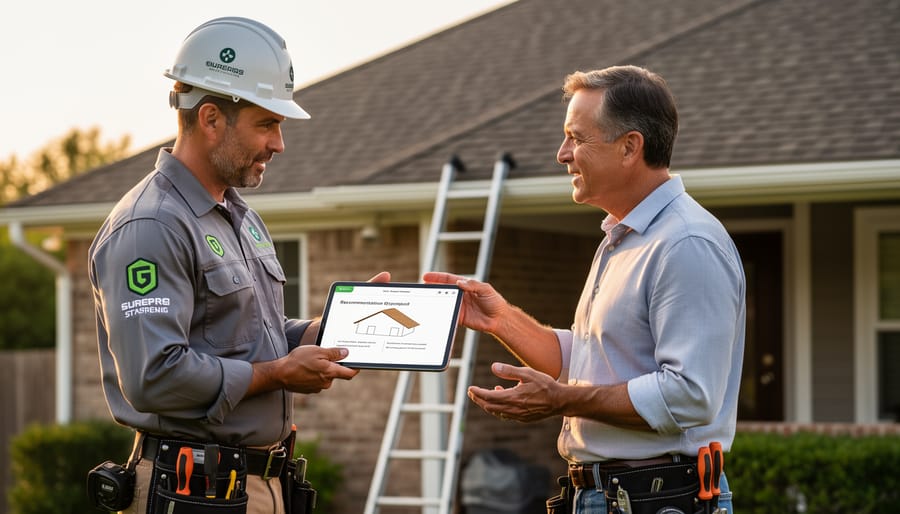
Before committing to a solar sales training program, take time to verify its legitimacy and alignment with your goals. Not all courses deliver equal value, and choosing the wrong one can waste your time and money without advancing your career.
Start by confirming the program covers applicable regulations and incentive structures for the regions where you plan to work. Solar policy varies significantly by state and utility territory, net metering rules, tax credits, and permitting requirements differ across jurisdictions. A quality training program should teach you how to navigate these regulatory frameworks, not just present generic sales techniques. If the curriculum doesn’t address local compliance and incentive research, you may struggle to serve clients effectively.
Check instructor credentials and the provider’s track record. Look for programs led by professionals with documented experience in solar sales or installation, ideally affiliated with recognized institutions or industry organizations. Avoid offerings that promise unrealistic income figures, claims like “earn six figures in your first year” without context about market conditions, effort required, or typical ramp-up time are red flags.
Finally, confirm the training matches your career direction. Some programs emphasize residential sales, while others focus on commercial or utility-scale projects. Courses also vary between technical depth (system design, site evaluation) and business skills (financing options, customer communication). Clarify whether you want a broad foundation or specialized knowledge, then choose accordingly. A mismatch here means you’ll spend valuable hours learning material that doesn’t serve your intended path.
Step-by-Step: How to Complete Solar Energy Sales Training
Step 1: Identify and Enroll in a Comprehensive Training Program
Start by researching training programs that cover a complete curriculum rather than isolated topics. Look for courses addressing financial modeling, technical solar fundamentals, environmental benefits presentation, customer engagement strategies, and regulatory frameworks like net metering and tax incentives. A comprehensive program teaches you to calculate ROI, explain available credits and grants, conduct site evaluations, and handle common objections, skills you’ll use daily in solar sales.
Central Washington University’s “Solar Business and Technical Sales, Online” session illustrates the type of structured program worth considering. Offered online (increasing accessibility regardless of location), with a session scheduled for August 9, 2026, at a $995 investment, this course covers financial, solar, and environmental benefits, ROI calculations, credits and grants, customer empowerment techniques, site evaluation, and net metering alongside tax incentive navigation. The online format allows you to learn while maintaining current employment.
When evaluating options, compare curriculum breadth against your career goals. Verify that instructors have actual solar industry experience. Check whether completion certificates carry weight with employers in your target market. Enrollment typically involves online registration, payment, and confirming technical requirements for virtual attendance, straightforward logistics that shouldn’t delay your start.
Step 2: Master Financial, Solar, and Environmental Benefits
Effective training teaches you to position solar as a triple win for customers. You’ll learn how to explain cost savings through reduced utility bills and long-term electricity price protection, making the financial case clear and quantifiable. The technical side covers how system design, solar panel efficiency and proper installation translate to reliable energy production that meets household or business needs. Finally, you’ll master articulating environmental benefits, carbon reduction, cleaner air, and renewable energy contribution, in ways that resonate emotionally without overwhelming the conversation.
Quality programs structure this as layered communication: start where the customer’s interest lies, then connect all three pillars. You might open with cost savings for a budget-conscious homeowner, then reinforce with environmental impact for someone motivated by sustainability. Training includes practice scenarios that build fluency in moving between financial data, technical specs, and environmental outcomes naturally, so you sound knowledgeable rather than scripted. This persuasive foundation prepares you to handle diverse customer motivations confidently.
Step 3: Learn ROI Calculations, Credits, and Grants

Quality solar sales training teaches you to speak the language customers care most about: money. You’ll learn practical financial analysis, starting with how to calculate a system’s payback period by comparing upfront costs against projected energy savings over time. Programs like Central Washington University’s course cover ROI calculations and grants as core curriculum, equipping you to show customers exactly when their investment breaks even and how much they’ll save across the system’s lifespan.
You’ll also master the incentive landscape. Training walks you through federal tax credits, state rebates, and local utility programs that dramatically improve ROI. Many programs teach you to layer these benefits, combining a federal tax credit with state incentives and utility rebates, to present the most compelling financial picture. You’ll practice identifying which grants apply to different customer types, from residential homeowners to small businesses, and learn where to direct clients for application support.
This financial fluency transforms you from someone who sells panels into a trusted advisor who helps customers make smart investment decisions backed by real numbers.
Step 4: Practice Addressing Customer Questions and Site Evaluation
Quality training programs teach you to turn technical knowledge into practical customer engagement. You’ll learn to handle objections confidently, whether clients worry about upfront costs, roof condition, or system reliability. This step focuses on real-world conversation skills: explaining payback periods clearly, assessing whether a property receives adequate sunlight, and identifying shading obstacles that affect performance.
Site evaluation training covers the fundamentals: roof orientation, structural integrity, electrical panel capacity, and local permit requirements. You’ll practice conducting preliminary energy audits to understand a customer’s current usage patterns and match system size to their needs. Programs also teach you how to tailor solutions, recognizing when a smaller system makes financial sense, when battery storage adds value, or when financing options remove barriers for cost-conscious buyers. This hands-on practice bridges the gap between classroom learning and closing actual sales.
Step 5: Understand Net Metering, Energy Analysis, and Tax Incentives
Mastering net metering, energy analysis, and tax incentives represents the final technical layer in solar sales training. Net metering allows customers to sell excess solar electricity back to the grid, creating credits that offset future bills, but rules vary dramatically by location. Quality training programs teach you how to navigate state-by-state net metering policies and explain these systems clearly to customers.
You’ll learn to analyze a client’s utility bills and usage patterns, identifying peak consumption hours and seasonal variations that affect solar system sizing and savings projections. This practical skill helps you design solutions matched to real household or business needs rather than generic estimates.
The training also covers the federal Investment Tax Credit, state-level incentives, and local rebate programs, each with different eligibility rules and deadlines. You’ll practice calculating how these incentives reduce upfront costs and improve ROI timelines. Understanding this complex landscape lets you present accurate, compelling financial scenarios that help customers make confident decisions about adopting solar energy.
Step 6: Apply Skills to Empower Customers Toward Solar Solutions
The culmination of quality training programs lies in translating technical knowledge into meaningful customer conversations. Most programs incorporate role-play exercises where trainees practice presenting solar solutions to diverse client scenarios, from budget-conscious homeowners to mission-driven institutions. These simulations teach you to listen first, identify the customer’s priorities, whether cost savings, energy independence, or environmental stewardship, and then frame your recommendations around those values. You’ll practice walking clients through ROI timelines, explaining net metering benefits in plain language, and addressing concerns about installation logistics or system maintenance. The goal is not to push a sale, but to guide customers toward decisions that genuinely improve their financial position while advancing clean energy adoption in their communities.
How Training Supports Workforce Development in Underserved Communities
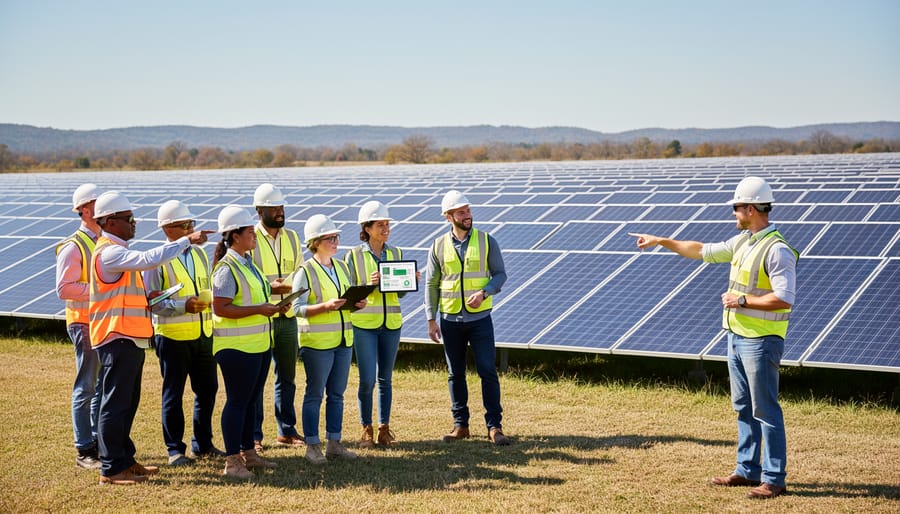
Workforce development initiatives extend solar sales training opportunities beyond traditional business centers into underserved communities, creating pathways for skilled professionals to serve markets historically excluded from renewable energy access. While mainstream training programs like Central Washington University’s solar business course equip individuals with core competencies, specialized organizations work to connect these skills with communities facing unique energy challenges.
Electron Freedom, partnering with GRID Alternatives, focuses on bringing solar workforce opportunities and renewable energy infrastructure to tribal communities through educational support and installation projects. These efforts create real-world contexts where trained solar sales professionals can apply their skills in underserved markets. Examples of tribal solar success demonstrate how trained professionals can facilitate clean energy adoption in communities where cost barriers and infrastructure gaps have historically limited access.
Organizations also develop educational frameworks that teach solar in tribal settings, building local capacity and awareness. For professionals completing general sales training, these community-focused initiatives represent meaningful career pathways where they can contribute to energy equity while building their businesses. The combination of accessible training programs and mission-driven deployment efforts ensures that solar workforce development reaches beyond conventional markets, creating economic opportunities in communities that stand to benefit most from renewable energy access.
Verifying Your Readiness and Taking Next Steps
Before stepping into your first solar sales role, you’ll want to confirm you’ve mastered the core competencies. Start by testing yourself on real-world scenarios: can you walk a homeowner through a complete ROI calculation that accounts for their actual energy bills, system size, and available tax incentives? Practice explaining net metering in plain language and tailoring your pitch to different property types, from suburban homes to commercial buildings. Check whether you can confidently answer the objections you learned in training, upfront cost concerns, roof condition questions, utility policy uncertainties, without hesitation.
Research your local market’s incentive landscape thoroughly. Each state and utility territory offers different credits, rebates, and net metering policies, so verify you understand the programs available where you’ll be selling. If gaps appear in your knowledge during this self-assessment, revisit your training materials or seek out region-specific resources before launching your job search.
Once you’ve confirmed your readiness, several career paths open up. Many graduates start with established solar installation companies as sales representatives, which provides mentorship and a steady client pipeline. Independent contracting offers higher earning potential but requires you to generate your own leads and manage business operations. Some professionals pursue additional certifications, such as NABCEP PV Installation Professional or state-specific solar contractor licenses, to broaden their expertise and credibility. Whether you choose employment, contracting, or further specialization, your foundational training provides the platform to grow within the expanding renewable energy sector.
Common Questions About Solar Energy Sales Training
How long does solar energy sales training typically take?
Most comprehensive programs can be completed in a few days to several weeks, depending on the format and depth of coverage. For example, intensive online courses often condense the curriculum into focused sessions that you can complete while maintaining other commitments.
What’s the difference between online and in-person solar sales training?
Online programs offer flexibility to learn at your own pace from anywhere, making them accessible for working professionals or those in remote areas. In-person training provides hands-on practice and direct interaction with instructors, though it requires travel and fixed scheduling.
How much should I expect to invest in solar sales training?
Quality programs typically range from several hundred to over a thousand dollars. The Central Washington University online session, for instance, is priced at $995 and covers comprehensive curriculum including ROI calculations, incentives, and customer communication skills.
Do I need formal certification to work in solar sales?
While certification isn’t always legally required, completing recognized training significantly improves your credibility with employers and customers. Many solar companies prefer or require proof of structured training when hiring sales professionals.
When choosing between programs, prioritize curriculum that matches your career goals. If you plan to work in residential solar, look for training that emphasizes homeowner concerns like financing options, net metering, and site evaluation for residential properties. Those targeting commercial markets need deeper coverage of business tax incentives and larger-scale financial analysis.
Income potential varies widely based on your sales structure and market. Entry-level solar sales positions might offer base salaries with commission structures, while experienced consultants in strong solar markets can earn substantially more. Your earnings will depend on factors including whether you work for an established installer, operate independently, the strength of incentives in your region, and your ability to build a client base. The skills you gain in training, particularly around ROI calculations and addressing customer concerns, directly impact your effectiveness and earning capacity in the field.
Solar energy sales training offers a clear, accessible entry point into one of the fastest-growing sectors of the clean energy economy. Whether you’re starting fresh or pivoting from another field, the structured curriculum, covering financial analysis, technical fundamentals, policy mechanisms, and customer communication, equips you with the confidence and competence to launch a meaningful career. You’ll learn to calculate ROI, navigate incentives, assess sites, and most importantly, guide customers toward solar solutions that make financial and environmental sense.
This isn’t just about individual advancement. Every trained professional becomes part of a larger movement to expand renewable energy access across all communities, including those historically underserved by the energy transition. Organizations like Electron Freedom, working alongside partners such as GRID Alternatives, are building infrastructure and educational pathways that create opportunities for solar professionals to serve diverse markets with cultural awareness and technical skill.
The renewable energy sector needs knowledgeable, passionate advocates who can translate complex technology into everyday value. If you’re ready to combine economic opportunity with genuine environmental impact, start by exploring training programs that match your schedule and career goals. Your first step toward a solar sales career begins today.